The surname Searle is believed to have originated as a male given name with Germanic and Norse origins. In Old German, the name was Sarilo or Serilo, a derivative of the word sarva, which means “armour”; the Norse equivalent was Sǫrli. In addition to “armour”, the original meaning of the name may have been “defender” or “protector”. The name was in use in Normandy, as Serlo, during the 10th to 11th centuries and was introduced in England by the Normans following their conquest in 1066 CE.
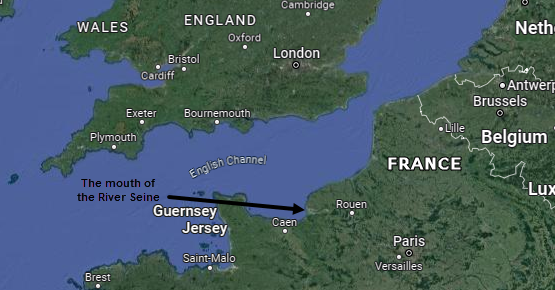
William the Conqueror, a great-great-great grandson of Rollo, invaded and captured England in 1066 CE, becoming the first Norman monarch of England. Accompanying William on his invasion of England was William de Perci, who had a brother named Serlo. In 1067 CE, Serlo de Perci was a monk at Mont Saint-Michel in Normandy. In 1072 CE, he was appointed the abbot of Gloucester Abbey, which was dedicated to Saint Peter, upon the recommendation of the Bishop of Salisbury, Osmund, the nephew of William the Conqueror. Serlo served as the abbot of Gloucester Abbey until his death in 1104 CE.
In December 1085 CE, William the Conqueror commissioned a great land survey of England and parts of Wales that was completed in 1086 CE and is known as the Domesday Book. The purpose of the survey was to assess the land and resources being owned in England at the time, allowing William to determine the extent to which he could raise taxes.
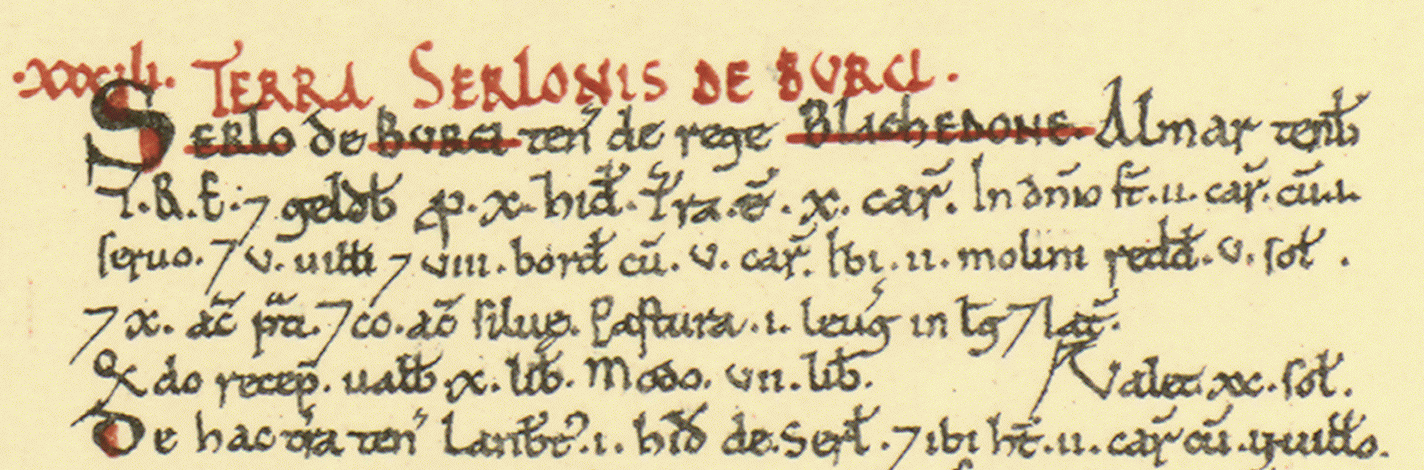
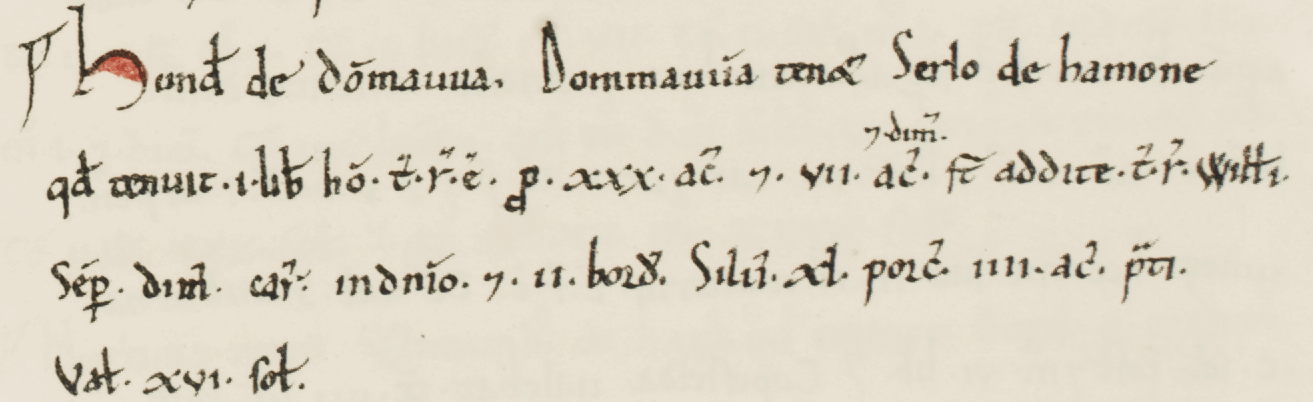
The Domesday Book, written in heavily abbreviated Latin, contains some of the first written accounts of the name Serlo. Serlo de Perci appears as the Abbot of Gloucester, however, other Serlo’s, such as Serlo de Burci in Somerset and Serlo de Hamone in Essex, appear with their full names written.
As the population of England increased, it became more common for people to adopt surnames, although these names were not necessarily hereditary at first: they often indicated who the person was based on location (e.g., Serlo of Burcy), family lineage (e.g., John son of Thomas), or profession (e.g., Richard the Baker).
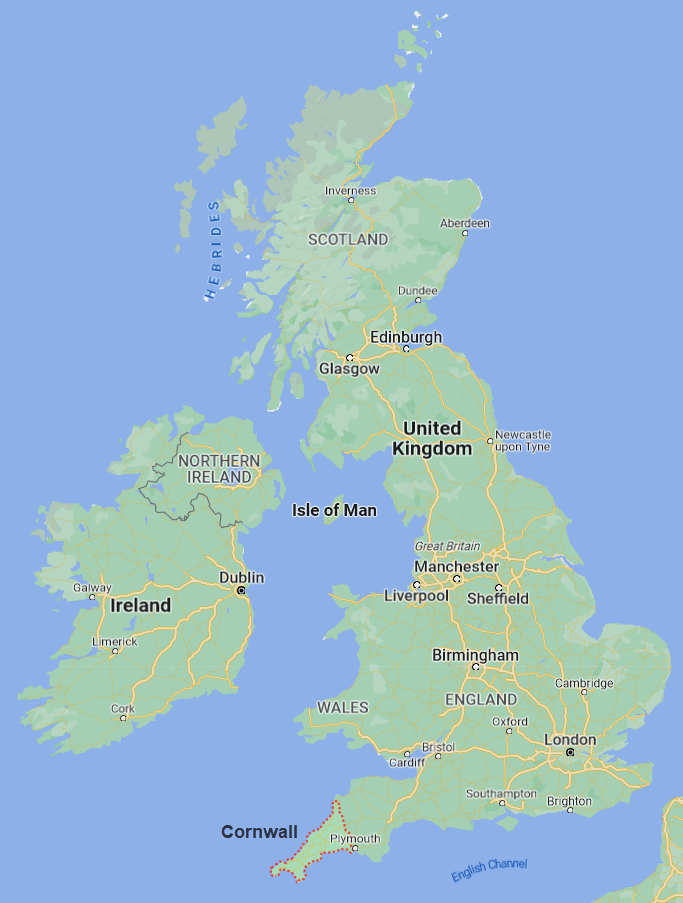
While it is likely the first people with the family name of Searle were descendants of the Normans that conquered England in 1066 CE, it is difficult to trace the surname from the use as a given name to the first families that used it as a surname. However, by the 14th century, the Searle family name had become established in both London, Devonport (now Plymouth), and Cornwall.
Many variations of the name have occurred throughout the years, often because most people could not read or write; people would say their name and whomever was writing it down would determine how they felt it should be written. Searle, Searl, Serle, Serl, Sarl, Sarle, Sarol, Syrell, and Sorrell are some of the most common variations.